Are mountain gorillas dangerous?
What is the difference between Bwindi and Mgahinga
How Many People Are Allowed in a Gorilla Trekking Group? Understanding Gorilla Trekking Group Sizes
Mountain gorilla trekking is one of Africa’s most extraordinary wildlife experiences, offering travelers the rare opportunity to enter the rainforest and observe endangered mountain gorillas in their natural habitat. Because gorillas are sensitive wild animals, trekking experiences are carefully regulated to protect both visitors and the gorillas.
For travelers planning their first gorilla adventure, one of the most important questions is: How many people are allowed in a gorilla trekking group? Understanding the official group size is essential because it helps visitors know what to expect while also highlighting how responsible tourism contributes to gorilla conservation.
During a standard mountain gorilla trekking experience in Uganda, Rwanda, and the Democratic Republic of Congo, a maximum of 8 visitors are allowed to visit one habituated gorilla family per day. This limit is established by conservation authorities to minimize disturbance to the gorillas while ensuring that visitors enjoy a meaningful and responsible wildlife experience.
The small group size allows travelers to observe gorilla behavior in a peaceful environment while reducing the impact of tourism on these endangered primates. It also gives visitors a better opportunity to appreciate remarkable behaviors such as family bonding, grooming, feeding, communication, and the protective role of the silverback.
Why Are Gorilla Trekking Groups Limited to 8 People? A Detailed Guide to Responsible Gorilla Tourism
Mountain gorilla trekking is one of the world’s most exclusive wildlife experiences, allowing visitors to enter the rainforest and spend time observing endangered mountain gorillas in their natural habitat. Unlike traditional wildlife safaris where animals are viewed from a distance, gorilla trekking involves entering the gorillas’ environment, making careful management essential.
One of the most important conservation rules is that only a maximum of 8 visitors are allowed to visit one habituated gorilla family per day. This regulation applies to gorilla trekking experiences in Uganda, Rwanda, and other regions where mountain gorilla tourism is practiced.
The limit of eight visitors is not simply a tourism rule; it is a carefully designed conservation measure developed through years of research and observation. Mountain gorillas are intelligent, social, and sensitive animals, and too much human presence can affect their natural behavior, health, and overall well-being.
By keeping trekking groups small, conservation authorities create a balance between allowing visitors to experience these incredible animals and protecting the long-term survival of gorilla populations.
Why Are Gorilla Trekking Groups Limited to 8 People?
The restriction of eight visitors per gorilla family is based on scientific research, conservation experience, and the need to maintain a peaceful relationship between humans and gorillas.
Although habituated gorillas have become accustomed to the presence of humans, they remain wild animals that require respect and protection. Habituation does not mean that gorillas are domesticated or pets; it simply means they have learned to tolerate carefully controlled human observation.
A large number of visitors entering the forest at the same time could create several challenges, including:
- Increased noise levels
- More movement around the gorillas
- Greater physical presence
- Higher risk of disease transmission
- Disruption of natural behaviors
A smaller group allows visitors to enjoy an authentic encounter while ensuring that gorillas remain comfortable in their natural environment.
1. Protecting Gorilla Health
One of the biggest reasons for limiting visitor numbers is to protect the health of mountain gorillas.
Mountain gorillas share approximately 98% of their DNA with humans, making them closely related to us biologically. This close relationship also means that gorillas can be vulnerable to some human illnesses, especially respiratory infections.
Even a simple human cold or flu can potentially become dangerous for a gorilla because their immune systems may not have strong resistance to certain human diseases.
How Smaller Groups Reduce Health Risks
By limiting the number of visitors, conservation authorities can reduce the chances of disease transmission through:
- Fewer people interacting with gorilla families
- Better monitoring of visitor health
- Easier enforcement of safety guidelines
- Reduced exposure to human pathogens
Visitors who are feeling unwell are usually advised not to participate in gorilla trekking. This protects both the travelers and the endangered gorillas.
Health Measures During Gorilla Trekking
Before entering the forest, visitors receive important instructions such as:
- Maintaining a safe distance from gorillas
- Avoiding touching the animals
- Covering their mouth when coughing or sneezing
- Following hygiene guidelines
- Respecting ranger instructions
These precautions help ensure that gorilla tourism remains safe and sustainable.
2. Reducing Stress on Gorilla Families
Mountain gorillas are highly intelligent animals with complex emotions and social relationships. They experience stress, curiosity, comfort, and fear just like many other highly developed mammals.
Although habituated gorillas accept human visitors, they still need a calm and natural environment to continue their normal activities.
Large groups of tourists could make gorillas uncomfortable by creating:
- Excessive noise
- Sudden movements
- Crowded viewing areas
- Increased pressure on the family group
A smaller group allows gorillas to behave naturally without feeling overwhelmed.
Protecting Natural Gorilla Behaviors
A gorilla family’s daily activities include:
Feeding
Gorillas spend several hours each day searching for and eating vegetation. Too many visitors could interrupt their feeding patterns or cause them to move away from important feeding areas.
Resting
Rest is essential for gorillas, especially for silverbacks, mothers, and young gorillas. A quiet environment allows them to rest without unnecessary disturbance.
Moving Through the Forest
Gorillas naturally move through different areas of the forest in search of food and safe resting places. Small visitor groups allow them to continue moving normally.
Caring for Infants
Baby gorillas require constant care and protection from their mothers and other family members. A calm environment helps young gorillas grow and develop naturally.
Social Interactions
Gorillas strengthen their family bonds through grooming, playing, vocal communication, and physical contact. Limiting visitors helps protect these important social behaviors.
3. Providing a Better Visitor Experience
The eight-person limit does not only benefit gorillas; it also creates a much better experience for travelers.
A smaller group allows visitors to enjoy a more personal and meaningful encounter without feeling crowded.
With fewer people, travelers have better opportunities to:
Observe Gorilla Behavior Clearly
Visitors can watch fascinating behaviors such as:
- Silverbacks protecting their families
- Mothers caring for infants
- Young gorillas playing
- Family members grooming each other
- Gorillas feeding peacefully
A smaller group means everyone gets a better view and can appreciate these moments fully.
Take Better Photographs
Gorilla trekking is a dream experience for many wildlife photographers. Smaller groups make it easier to:
- Position yourself respectfully
- Capture memorable moments
- Avoid blocking other visitors
- Follow photography guidelines
Photography is encouraged, but the comfort of the gorillas always comes first.
Receive More Attention From Guides
With fewer visitors, guides can provide more detailed explanations about:
- Gorilla personalities
- Family history
- Conservation efforts
- Forest ecosystems
- Gorilla communication
This turns a simple wildlife visit into an educational and unforgettable experience.
How Are Gorilla Trekking Groups Organized?
Before starting the trek, all visitors gather at the park headquarters for a detailed morning briefing.
During this session, guides and conservation officials explain:
- Gorilla trekking rules
- Safety procedures
- Expected behavior around gorillas
- Forest conditions
- What visitors should carry
After the briefing, visitors are divided into trekking groups of no more than eight people.
The groups are carefully organized based on several factors:
Fitness Levels of Trekkers
Gorilla families are located in different areas of the forest, and some treks may be more challenging than others. Guides consider visitor fitness levels when assigning groups.
Trekking Difficulty
Some gorilla families may be located closer to the starting point, while others require longer hikes through steep rainforest terrain.
Group assignments help ensure visitors have the most suitable experience.
Location of Gorilla Families
Trackers monitor gorilla movements daily because families move naturally through the forest. Groups are assigned based on where gorilla families are located.
Visitor Interests and Abilities
Experienced guides consider visitor preferences and physical ability to create a comfortable trekking experience.
The Role of Guides and Trackers During Gorilla Trekking
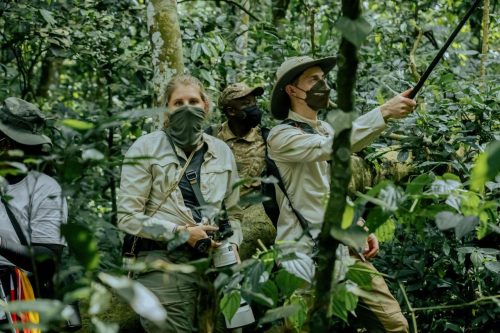
Gorilla trekking would not be possible without the expertise of professional guides, trackers, and wildlife rangers.
These conservation professionals play a crucial role in protecting gorillas and ensuring visitor safety.
Gorilla Trackers
Trackers usually enter the forest early in the morning before visitors arrive. Their job is to locate the gorilla family, monitor their movements, and communicate their location to the trekking team.
Trackers understand:
- Gorilla footprints
- Feeding signs
- Nest locations
- Movement patterns
- Individual gorilla behaviors
Their knowledge allows visitors to find gorillas while minimizing disturbance.
Gorilla Guides
Guides lead visitors throughout the trekking experience. They explain:
- Gorilla behavior
- Forest ecology
- Conservation history
- Safety procedures
- Proper photography methods
They also interpret gorilla actions, helping visitors understand what they are witnessing.
Rangers
Wildlife rangers provide additional protection for both visitors and gorillas. They help enforce conservation rules and ensure that trekking activities follow official guidelines.
How Long Do You Spend With a Gorilla Family?
Once visitors locate their assigned gorilla family, they are usually allowed to spend a maximum of one hour observing the gorillas.
This time limit is carefully designed to protect the animals while still allowing visitors to experience a meaningful encounter.
During this hour, visitors may witness extraordinary moments, including:
- A silverback watching over his family
- Mothers nursing and protecting babies
- Young gorillas playing in the forest
- Adults grooming each other
- Gorillas feeding naturally
Although one hour may seem brief, the experience is incredibly powerful because visitors are witnessing wild animals in their natural habitat.
Can Larger Groups Visit the Same Gorilla Family?
No. Gorilla trekking regulations do not allow large groups of visitors to visit one gorilla family at the same time.
Only the assigned group of up to eight visitors, together with guides and rangers, can approach the gorilla family.
This restriction helps maintain:
- Minimal disturbance
- Better visitor management
- Improved safety
- Natural gorilla behavior
The purpose of gorilla trekking is responsible wildlife observation, not mass tourism.
Can Private Gorilla Trekking Groups Be Arranged?
Yes, travelers can request private trekking arrangements through a professional tour operator.
A private arrangement allows travelers to enjoy a more personalized safari experience while still following official conservation regulations.
Benefits may include:
- Trekking with family or friends
- More personalized guide attention
- Flexible safari planning
- Combining gorilla trekking with other activities
However, even private groups must respect the official limit of eight visitors per gorilla family.
Why Small Gorilla Groups Support Conservation: Protecting Mountain Gorillas Through Responsible Tourism
Limiting gorilla trekking groups to a maximum of eight visitors per gorilla family is one of the most important conservation strategies that has helped protect endangered mountain gorillas. While the main purpose of this rule is to reduce disturbance to the animals, it also plays a much bigger role in creating a sustainable tourism model that benefits gorillas, forests, researchers, conservation teams, and local communities.
Mountain gorillas are among the world’s most endangered wildlife species, and their survival depends on careful protection of their habitats and responsible interaction with humans. Unlike mass tourism experiences, gorilla trekking is designed around low-impact tourism, where fewer visitors create a more meaningful experience while ensuring that gorillas remain safe and healthy.
The controlled number of visitors helps generate conservation funding without overwhelming the fragile rainforest environment where gorillas live.
1. Supporting Gorilla Monitoring and Research
One of the greatest benefits of controlled gorilla tourism is the support it provides for continuous monitoring and scientific research.
Mountain gorilla families are monitored every day by experienced trackers, researchers, and conservation teams. These professionals collect important information about individual gorillas, family groups, and changes within their environment.
Understanding Gorilla Health
Regular monitoring allows conservation teams to identify health concerns early. Researchers observe:
- Physical condition of individual gorillas
- Signs of illness or injury
- Reproductive success
- Infant development
- Social relationships within groups
Because gorillas live in close family units, understanding the health of each individual helps conservationists protect the entire population.
Tracking Gorilla Movements and Behavior
Gorilla trackers follow family groups through the forest to understand:
- Daily movement patterns
- Feeding areas
- Resting locations
- Social interactions
- Territory use
This information helps conservation authorities make better decisions about habitat protection and tourism management.
Identifying Individual Gorillas
Each habituated gorilla has unique features such as facial characteristics, scars, body size, and behavior patterns. Researchers use these differences to identify and record individual gorillas throughout their lives.
Long-term monitoring helps experts understand:
- Population growth
- Family changes
- Birth rates
- Silverback leadership changes
- Natural behaviors
Without controlled tourism funding, maintaining these detailed monitoring programs would be much more challenging.
2. Strengthening Anti-Poaching Protection
Although mountain gorillas are now better protected than in previous decades, they still face threats from illegal activities, habitat destruction, and human pressure.
Revenue generated from responsible gorilla tourism helps support ranger teams that protect gorilla habitats.
Supporting Wildlife Rangers
Rangers play a vital role in conservation by:
- Patrolling forests
- Monitoring gorilla families
- Removing illegal traps
- Reporting threats
- Protecting wildlife habitats
Their daily presence in the forest helps discourage activities that could harm gorillas or other wildlife species.
Preventing Illegal Activities
Although mountain gorillas are not usually targeted directly by hunters, they can be affected by activities such as:
- Illegal hunting of other animals
- Forest encroachment
- Uncontrolled resource extraction
Rangers help maintain protected areas where gorillas can live safely.
Rapid Response to Threats
A strong ranger presence allows conservation teams to respond quickly when problems occur.
This may include:
- Investigating suspicious activities
- Removing harmful traps
- Assisting injured wildlife
- Protecting vulnerable gorilla groups
Every successful gorilla trek contributes indirectly to these protection efforts.
3. Supporting Habitat Conservation and Forest Protection
Mountain gorillas depend entirely on healthy rainforest ecosystems. Their survival requires forests with enough food, water, and safe areas for breeding and raising young.
Small trekking groups help reduce pressure on these fragile environments while tourism revenue supports long-term habitat protection.
Protecting Gorilla Habitats
Conservation programs work to preserve important forest areas by preventing:
- Deforestation
- Illegal farming expansion
- Habitat destruction
- Unsustainable resource use
Protected forests provide gorillas with:
- Natural feeding areas
- Safe nesting locations
- Breeding environments
- Protection from human disturbance
Maintaining Biodiversity
The forests where mountain gorillas live are home to many other species, including:
- Forest elephants
- Antelopes
- Birds
- Primates
- Reptiles
- Insects
Protecting gorilla habitats also protects entire ecosystems and supports biodiversity conservation.
Reducing Tourism Impact
Large numbers of visitors could damage forest trails, increase waste, and disturb wildlife.
By limiting trekking groups:
- Forest paths experience less pressure
- Noise pollution is reduced
- Wildlife disturbance is minimized
- Natural habitats remain healthier
Low-impact tourism ensures that future generations can continue experiencing these forests.
4. Creating Benefits for Local Communities
Conservation cannot succeed without support from communities living near gorilla habitats. Responsible gorilla tourism helps create opportunities for local people and encourages them to protect wildlife.
When communities benefit from tourism, they become important partners in conservation.
Creating Employment Opportunities
Gorilla tourism provides jobs for many local residents, including:
- Gorilla guides
- Trackers
- Park rangers
- Drivers
- Lodge employees
- Porters
- Cultural tourism providers
These opportunities provide stable income and improve livelihoods.
Supporting Local Businesses
Visitors who come for gorilla trekking also support businesses such as:
- Accommodation facilities
- Restaurants
- Transport services
- Craft markets
- Local tour services
This creates a wider economic impact beyond the national parks.
Encouraging Conservation Awareness
Tourism helps communities understand the value of protecting gorillas and forests.
Conservation programs may support:
- Environmental education
- School programs
- Community awareness projects
- Wildlife protection initiatives
When people see direct benefits from conservation, they are more likely to support efforts to protect wildlife.
5. Promoting Sustainable Tourism
Small gorilla trekking groups represent a model of sustainable tourism because they balance visitor experiences with wildlife protection.
Unlike high-volume tourism, sustainable gorilla tourism focuses on quality rather than quantity.
A small group allows:
- Better control of visitor behavior
- Reduced pressure on gorilla families
- Improved conservation management
- More meaningful wildlife experiences
The goal is not to bring as many visitors as possible but to ensure that tourism can continue without harming the animals it depends on.
6. Protecting the Natural Behavior of Gorillas
One of the greatest achievements of controlled gorilla tourism is that it allows humans to observe gorillas without changing their natural behavior.
Gorillas can continue to:
- Feed naturally
- Care for their infants
- Communicate with family members
- Move through the forest
- Maintain social relationships
Small groups reduce the chances of gorillas feeling overwhelmed or disturbed.
This ensures that visitors see authentic wildlife behavior rather than animals that have changed because of excessive human interaction.
7. Ensuring the Future Survival of Mountain Gorillas
The ultimate goal of responsible gorilla tourism is long-term survival.
Mountain gorillas have faced many challenges, including:
- Habitat loss
- Human-wildlife conflict
- Disease risks
- Historical poaching threats
Conservation programs supported by tourism have helped stabilize gorilla populations and improve protection efforts.
By maintaining strict visitor limits, conservation authorities ensure that tourism remains a tool for protection rather than a threat.
Final Thoughts: A Small Group Creates a Greater Gorilla Experience
The limit of eight visitors per gorilla family creates the perfect balance between conservation and tourism. It protects the health, safety, and natural behavior of mountain gorillas while giving travelers an intimate opportunity to experience these incredible animals.
Gorilla trekking is not about large crowds or quick encounters. It is about entering the rainforest respectfully, understanding gorilla behavior, and creating a meaningful connection with one of the world’s most endangered species.
With professional guides, expert trackers, and responsible tourism practices, a gorilla trekking adventure with Tukumbe Tours and Travel offers a safe, educational, and unforgettable journey into the heart of Africa’s rainforest wilderness.
Request for A Free Trip Quote
We’d be delighted to help you plan your dream Uganda Gorilla Safari. Simply fill out the inquiry form below, and one of our safari specialists will get back to you with a personalized quote and expert travel advice.
For direct assistance, feel free to contact us by email at info@tukumbetours.com or connect with us on WhatsApp at +256752294116. We look forward to creating an unforgettable African adventure for you