Where can I see golden monkeys in Uganda?
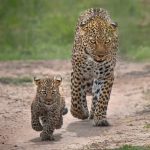
Can you see leopards on a Uganda safari?
What Is the Best Place to See Colobus Monkeys in Uganda?
What Is the Best Place to See Colobus Monkeys in Uganda?
Uganda is one of Africa’s most rewarding destinations for travelers interested in primates. The country is home to chimpanzees, golden monkeys, red-tailed monkeys, L’Hoest’s monkeys, mangabeys and black-and-white colobus monkeys. For travelers specifically asking, “What is the best place to see colobus monkeys in Uganda?”, Kibale National Park is one of the strongest choices, particularly because of its exceptional concentration and diversity of primates.
Kibale National Park is officially promoted by the Uganda Wildlife Authority as a premier primate destination. Its Kanyanchu Primate Walk provides opportunities to encounter 13 different primate species, including black-and-white colobus monkeys, red colobus, L’Hoest’s monkeys and grey-cheeked mangabeys.
However, Kibale is not the only Ugandan destination where black-and-white colobus monkeys occur. They can also be encountered in places such as Queen Elizabeth National Park, Mount Elgon National Park and Toro-Semliki Wildlife Reserve. This means travelers have several possibilities, but Kibale stands out for those who want to combine colobus sightings with a broader primate experience.
Why Kibale National Park Is a Top Choice for Colobus Monkeys
Kibale National Park is located in western Uganda and protects approximately 321 square kilometers of forest habitat. The park is famous for its extraordinary primate diversity and is often described as one of Africa’s leading destinations for primate experiences.
The forest provides habitat for numerous monkey species, making it particularly attractive to wildlife enthusiasts who want to see several primates during one visit.
Black-and-white colobus monkeys are among the species that visitors can encounter during the Kanyanchu Primate Walk. Their striking black-and-white coats and long, flowing tails make them particularly noticeable when they move through the forest canopy.
For someone interested specifically in monkeys rather than only chimpanzees, Kibale offers an opportunity to turn a single forest excursion into a much broader primate-watching experience.
What Makes Black and White Colobus Monkeys Special?
The black and white colobus monkey, scientifically known as Colobus guereza, is one of Uganda’s distinctive forest primates.
Its appearance makes it relatively easy to recognize. The dark body contrasts with long white hair around the face and sides of the body, while the tail has a characteristic white appearance.
These monkeys are highly adapted to life in the forest canopy. Seeing them often involves looking upward into the trees rather than searching along the forest floor.
Their arboreal lifestyle is one reason a guided forest walk can be so rewarding. Experienced guides know where to look and can help visitors identify movement and calls that might otherwise be missed.
The Kanyanchu Primate Walk
For travelers visiting Kibale specifically to see colobus monkeys, the Kanyanchu area is particularly important.
Uganda Wildlife Authority describes the Kanyanchu Primate Walk as Kibale’s flagship wildlife experience. The walk provides opportunities to encounter 13 primate species, including black and white colobus monkeys.
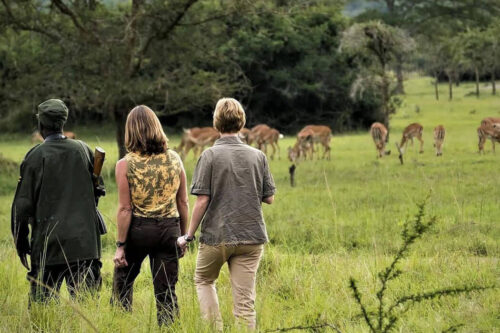
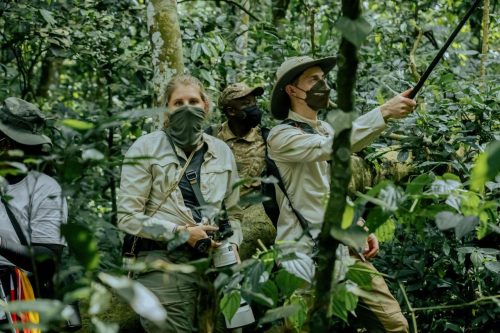
The experience is different from a traditional savannah game drive. Instead of traveling in a safari vehicle across open grassland, visitors walk through forest trails accompanied by guides.
The forest environment means that sightings can happen at different levels. Some monkeys may be high in the canopy, while others may move between lower branches.
This makes the experience both educational and adventurous because visitors are actively exploring the ecosystem rather than simply observing wildlife from a vehicle.
Can You See Black and White Colobus Monkeys in Queen Elizabeth National Park?
Yes. Queen Elizabeth National Park is another Ugandan destination where black and white colobus monkeys occur.
Uganda Wildlife Authority lists black and white colobus monkeys among the primates found in Queen Elizabeth National Park, alongside chimpanzees, vervet monkeys and olive baboons.
This makes Queen Elizabeth a particularly attractive option for travelers who want to combine primate sightings with a traditional wildlife safari.
A safari here can include game drives to search for elephants, buffaloes, lions and antelopes, while other activities provide opportunities to explore the park’s waterways and forest habitats.
Therefore, if your itinerary already includes Queen Elizabeth National Park, you do not necessarily need to make a separate journey solely for black-and-white colobus monkeys.
Can You See Colobus Monkeys at Mount Elgon?
Mount Elgon National Park is another destination where black and white colobus monkeys can be found.
The Uganda Wildlife Authority lists black-and-white colobus monkeys among the mammals living in the park’s forests and moorlands.
Mount Elgon offers a very different experience from Kibale. Rather than focusing primarily on primate diversity, the destination is known for mountain landscapes, forests, waterfalls, caves and hiking opportunities.
For adventurous travelers, combining wildlife observation with mountain trekking can create a particularly memorable Uganda itinerary.
Colobus Monkeys in Toro Semliki Wildlife Reserve
Toro-Semliki Wildlife Reserve provides another interesting opportunity for travelers interested in black and white colobus monkeys.
Uganda Wildlife Authority describes a primate walk in the reserve lasting approximately three to four hours. Species that may be encountered include chimpanzees, red tailed monkeys, vervet monkeys, black and white colobus monkeys and baboons.
The reserve is especially interesting because its landscape combines savannah, woodland and riverine forest.
Visitors therefore have the opportunity to experience a variety of habitats during the same trip. In addition to primates, the reserve supports elephants, buffaloes, Uganda kob, waterbuck and other wildlife.
For travelers looking for a quieter and less conventional wildlife experience, Toro Semliki can be an appealing addition to a western Uganda itinerary.
Which Destination Should You Choose?
The answer depends on what you want from your trip.
If your priority is seeing a wide range of primates, Kibale National Park is an excellent choice because of its exceptional primate diversity and established Kanyanchu Primate Walk.
If you want to combine colobus monkeys with a classic wildlife safari, Queen Elizabeth National Park can be a strong option because it offers both primate and savannah wildlife experiences.
If you are interested in mountain scenery and hiking as well as wildlife, Mount Elgon provides a different type of experience while still offering opportunities to encounter black and white colobus monkeys.
If you prefer a less conventional primate and wildlife experience, Toro Semliki Wildlife Reserve provides guided primate walks where black-and-white colobus monkeys can be encountered.
Best Time to See Colobus Monkeys in Uganda
Black and white colobus monkeys live in Uganda’s forests throughout the year, so there is no single short season when they can only be seen.
The quality of a primate watching experience can, however, be influenced by weather. Uganda’s forest environments receive rainfall throughout the year, and trails can become muddy during wetter periods.
Kibale’s chimpanzee tracking experiences take place throughout the year, with Uganda Wildlife Authority noting that the rainy season can actually be favorable for chimpanzee tracking despite muddy conditions.
For travelers whose main objective is primate photography and forest exploration, both dry and wet periods can therefore offer advantages. The dry season may provide more comfortable walking conditions, while wetter months can produce lush vegetation and vibrant forest scenery.
What Should You Expect During a Colobus Monkey Experience?
Visitors should approach colobus monkey watching with realistic expectations.
These are wild animals living in their natural environment. Their movements cannot be guaranteed, and they may spend time high in the canopy or move away from trails.
A guided experience improves the opportunity to find them because guides are familiar with the forest and can interpret animal calls, movement and feeding patterns.
The experience is therefore not simply about ticking a species off a checklist. It is about entering the forest, learning about its ecosystem and observing wildlife behaving naturally.
This makes patience an important part of primate watching.
What Should You Bring?
Comfortable walking shoes are important because forest trails can be uneven and muddy.
Lightweight, long-sleeved clothing can provide protection from vegetation and insects, while a waterproof jacket is useful because rain can occur even when the day begins under clear skies.
A small backpack, drinking water, insect repellent and a camera are also useful.
For photography, a camera with a reasonable zoom can be especially valuable because colobus monkeys may remain high in the trees.
Travelers should also avoid making excessive noise or attempting to approach animals independently. Following the instructions of guides helps protect both visitors and wildlife.
Combining Colobus Monkey Watching With Other Uganda Experiences
One of the biggest advantages of choosing Uganda for a primate-focused holiday is the ability to combine several experiences.
A trip to Kibale can include chimpanzee tracking, the Kanyanchu Primate Walk and bird watching. From there, travelers can continue to Queen Elizabeth National Park for game drives and a boat cruise along the Kazinga Channel.
A longer itinerary can then continue toward Bwindi or Mgahinga for gorilla or golden monkey experiences.
This combination allows travelers to experience different ecosystems and primate species during one Uganda adventure.
It also reflects why Uganda is often described as the Pearl of Africa. The country’s tourism appeal is not based on one animal or one park but on the variety of experiences that can be connected into one journey.
Why Colobus Monkey Tourism Matters
Observing black and white colobus monkeys in protected areas can contribute to the wider value of conserving forest ecosystems.
These forests provide habitat for numerous species, not just one type of monkey. Protecting the habitat therefore helps maintain a broader ecological system containing primates, birds, trees, insects and other wildlife.
Uganda Wildlife Authority manages national parks and wildlife reserves as part of its mandate to conserve and sustainably manage the country’s wildlife.
Responsible tourism can support this system by creating economic value around protected areas and encouraging visitors to appreciate the importance of forest conservation.
Planning a Colobus Monkey Safari With Tukumbe Tours and Travel
For travelers interested in seeing black-and-white colobus monkeys, itinerary planning is important because the best destination depends on the rest of the trip.
Tukumbe Tours and Travel can help design a Uganda itinerary that combines primate experiences with wildlife, culture and adventure.
A primate-focused itinerary could include Kibale National Park for chimpanzees and multiple monkey species, Queen Elizabeth National Park for wildlife and primates, and southwestern Uganda for gorilla or golden monkey trekking.
This approach allows travelers to experience several of Uganda’s most important attractions rather than spending their entire holiday focused on one activity.
Final Thoughts
So, what is the best place to see colobus monkeys in Uganda?
For travelers looking for a dedicated primate experience, Kibale National Park is one of the best choices, particularly because its Kanyanchu Primate Walk provides opportunities to encounter black-and-white colobus monkeys alongside a remarkable variety of other primates.
However, Queen Elizabeth National Park, Mount Elgon National Park and Toro Semliki Wildlife Reserve also provide opportunities to see black-and-white colobus monkeys in different environments.
The best destination ultimately depends on the type of Uganda safari you want. Whether you are a primate enthusiast, wildlife photographer, bird watcher, hiker or first-time safari traveler, adding a forest primate experience can make your journey through Uganda considerably richer.
For a professionally planned Uganda safari, Tukumbe Tours and Travel can help you combine colobus monkey experiences with chimpanzee tracking, gorilla trekking, wildlife safaris and other destinations across the Pearl of Africa
Request for A Free Trip Quote
We’d be delighted to help you plan your dream Uganda Gorilla Safari. Simply fill out the inquiry form below, and one of our safari specialists will get back to you with a personalized quote and expert travel advice.
For direct assistance, feel free to contact us by email at info@tukumbetours.com or connect with us on WhatsApp at +256752294116. We look forward to creating an unforgettable African adventure for you