Chimpanzee Civil War in Kibale National Park points
How Uganda Is Marketing the Pearl of Africa
Best Time to Visit Uganda for a Safari
Uganda is one of Africa’s most diverse safari destinations, offering visitors the opportunity to experience savannah wildlife, tropical forests, mountain gorillas, chimpanzees, spectacular landscapes and some of the continent’s finest birdlife. From the open plains of Murchison Falls and Queen Elizabeth National Parks to the remote wilderness of Kidepo Valley, the country provides a safari experience that can be enjoyed throughout the year.
However, choosing the right time to visit Uganda can make a significant difference to your safari experience. Weather conditions influence wildlife movements, road conditions, vegetation, photography opportunities and the overall comfort of game drives and outdoor activities.
The good news is that Uganda does not have a single short safari season. Wildlife viewing is possible throughout the year, but the dry months are generally considered the best time for traditional savannah game viewing because animals are more likely to gather around available water sources and vegetation is less dense. Uganda Wildlife Authority identifies June to August and December to February as important dry-season periods for wildlife viewing in savannah reserves.
The Best Time for a Uganda Safari
For most travelers, the best time to visit Uganda for a safari is during the dry seasons, particularly from June to September and from December to February.
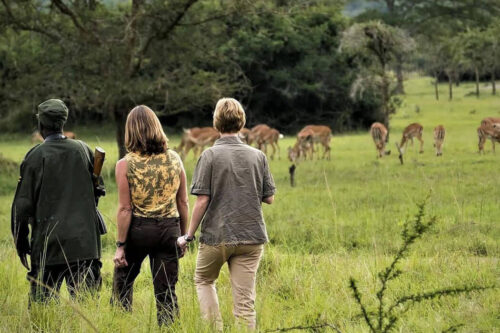
During these periods, rainfall is generally lower in many of the country’s major safari areas. This can make dirt roads easier to navigate and improve conditions for game drives. In places such as Murchison Falls National Park, the dry season is particularly rewarding because wildlife becomes more concentrated around water sources.
Murchison Falls National Park, for example, experiences relatively dry conditions from December to February and June to September. Uganda Wildlife Authority notes that these periods are especially suitable for wildlife viewing because animals tend to concentrate around water points.
This does not mean that the wet seasons are unsuitable. In fact, travelers who visit Uganda during the rainy months can enjoy lush scenery, fewer visitors and excellent opportunities for bird watching and photography.
Visiting Uganda Between June and September
June through September is one of the most popular periods for a Uganda safari. The months generally offer favorable conditions for game drives across many savannah destinations.
The vegetation becomes less dense in many areas, making it easier to spot animals from safari vehicles. As water becomes less available away from permanent rivers and lakes, wildlife can also become more predictable around water sources.
This makes destinations such as Murchison Falls, Queen Elizabeth, Lake Mburo and Kidepo Valley particularly attractive during this period.
Kidepo Valley National Park can be especially rewarding during the dry season. The Narus Valley becomes an important wildlife area because water remains available while surrounding water sources become increasingly limited. This can create excellent opportunities to observe elephants, buffaloes, lions and different antelope species.
June to September is also an excellent period for combining a savannah safari with gorilla trekking or chimpanzee experiences. However, visitors should remember that forest environments have their own weather patterns, so dry-season conditions in a savannah park do not necessarily mean completely dry conditions in Bwindi or Kibale.
Visiting Uganda Between December and February
December to February is another excellent safari period.
The landscape is often relatively dry, making road travel and game drives more comfortable in many savannah areas. Wildlife viewing can be rewarding as animals seek water and open areas become easier to explore.
For travelers planning a safari during the end-of-year holiday period, December and January can be particularly attractive. However, because Christmas and New Year are popular travel periods, early planning is recommended, especially if your itinerary includes popular lodges, gorilla trekking or a multi-park safari.
February can also provide good wildlife-viewing conditions before the main March–May rainy period begins.
Is the Rainy Season a Bad Time for a Uganda Safari?
No. The rainy season should not automatically be considered a bad time to visit Uganda.
Uganda is a green and fertile country, and rainfall contributes to some of its most beautiful landscapes. During the wetter months, vegetation becomes lush, landscapes appear vibrant and many areas can be particularly attractive for photographers.
The main consideration is that heavy rain can make some unpaved roads and forest trails more challenging. Uganda Wildlife Authority notes that during wet periods, roads and forest trails can become difficult, while rainfall can interfere with some outdoor activities.
For travelers who are flexible and do not mind occasional rain, the wet season can offer a quieter and more intimate safari experience.
Visiting Uganda Between March and May
March to May is generally one of Uganda’s wetter periods.
Travelers visiting during these months should expect more frequent rainfall, although rain does not necessarily last throughout the entire day. Safari activities can often continue between showers, and experienced safari guides know how to adapt routes according to weather and wildlife movements.
One advantage of this period is the scenery. Grasslands and forests become greener, creating beautiful landscapes for photography.
Another advantage can be lower visitor numbers compared with the busiest dry-season periods. Travelers looking for a more relaxed experience may therefore find the wet season appealing.
The wet season can also be particularly interesting for bird enthusiasts because Uganda is an exceptional birding destination with more than 1,000 bird species recorded across its protected areas.
Visiting Uganda Between October and November
October and November are also associated with wetter conditions in many parts of Uganda.
Although rain can make some roads muddy, this period can still be rewarding for travelers interested in landscapes, birds, primates and photography.
Safari planning during these months should take local conditions into consideration rather than relying only on a general national weather pattern. Uganda’s geography is diverse, and conditions can vary between northern savannah parks, western Uganda and the forested areas around Bwindi and Kibale.
A knowledgeable local tour operator can adjust the itinerary according to the destinations being visited and the activities planned.
Best Time for Gorilla Trekking and Safari Combination Trips
One of Uganda’s biggest advantages is that travelers can combine traditional wildlife safaris with gorilla trekking and chimpanzee tracking.
This makes Uganda particularly attractive for visitors who want more than a conventional savannah safari.
Dry-season months are generally preferred for many wildlife-viewing activities, while gorilla trekking can take place throughout the year. Mgahinga Gorilla National Park, for example, is officially described by UWA as a year-round destination for gorilla tracking.
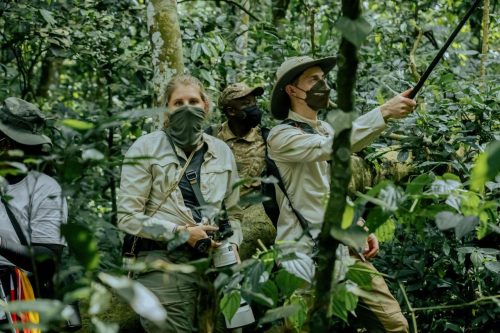
However, trekking conditions can still be influenced by rainfall because Bwindi and Mgahinga are forest and mountain environments. Even during generally drier periods, travelers should be prepared for changing weather and muddy trails.
Chimpanzee tracking also demonstrates why there is no single perfect month for every Uganda tourism experience. UWA notes that chimpanzee tracking takes place throughout the year, while the rainy season can actually provide favorable conditions for tracking because chimpanzees may remain closer to food sources instead of moving deeper into the forest.
Best Time for Wildlife Photography
If photography is one of your main priorities, the dry seasons can provide excellent opportunities.
Lower vegetation in some savannah areas can make animals easier to see, while wildlife gathering around water can create natural photographic opportunities.
However, the rainy season has its own photographic advantages. Green vegetation, dramatic clouds, reflections, colorful birds and fresh landscapes can produce spectacular images.
For photographers, therefore, the “best” season depends on the type of images you want. Dry-season safaris can be ideal for concentrated wildlife viewing, while wet-season safaris can produce dramatic landscape and environmental photography.
Best Time for Bird Watching
Uganda is a year-round birding destination, but particular periods can offer different advantages.
Uganda Wildlife Authority states that bird watching is possible throughout the year because many resident species remain in the country year-round. It also identifies late May through September as a particularly good period, when there is less rain and food remains abundant.
December and January can also be good months for birding, while some areas become especially interesting at different times depending on rainfall and bird movements.
Travelers planning a dedicated birding safari should therefore choose their travel period based on the species and regions they want to see rather than simply selecting the traditional safari dry season.
Best Time to Visit Different Safari Destinations
The best travel period can vary depending on which national parks you plan to visit.
Murchison Falls National Park is particularly rewarding during the dry seasons from December to February and June to September. Wildlife becomes more concentrated around water sources, and game drives can be easier to manage.
Queen Elizabeth National Park can be visited throughout the year, with dry periods generally offering favorable conditions for conventional wildlife viewing. The park also provides opportunities for boat cruises, game drives and chimpanzee experiences.
Kidepo Valley National Park is particularly impressive during dry periods because wildlife becomes concentrated around remaining water sources, especially in the Narus Valley.
Bwindi Impenetrable National Park and Mgahinga Gorilla National Park can be visited throughout the year for gorilla trekking. Because these are mountainous forest environments, visitors should be prepared for rain and changing trail conditions regardless of the broader national weather season.
Kibale National Park is also a year-round destination for chimpanzee tracking, with wet-season conditions sometimes providing advantages for tracking because chimpanzees may remain closer to food sources.
Should You Travel During Peak or Low Season?
Choosing between peak and low season depends on your priorities.
Traveling during the dry season is ideal for visitors who prioritize predictable game viewing, easier road conditions and comfortable safari conditions. It is also a popular time to travel, so planning accommodation and permits early is advisable.
Traveling during the wetter months can be attractive to visitors who prefer fewer crowds, greener scenery and potentially greater flexibility with accommodation.
Instead of asking whether Uganda is better in the dry or wet season, it is more useful to ask what you want to experience.
A traveler focused on seeing large concentrations of savannah wildlife may prefer the dry season. A photographer interested in dramatic landscapes may enjoy the rainy season. A dedicated birder may choose dates based on specific species. Someone combining gorilla trekking, chimpanzee tracking and safari may find that either season can work with careful itinerary planning.
Why Uganda Can Be Visited All Year Round
Uganda’s greatest tourism advantage is its diversity.
The country has savannah parks, tropical forests, mountains, lakes, rivers and wetlands. Uganda Wildlife Authority currently manages 10 national parks, including Murchison Falls, Queen Elizabeth, Kidepo Valley, Kibale, Bwindi Impenetrable and Mgahinga Gorilla National Parks.
This diversity means that unfavorable weather in one region does not necessarily prevent visitors from enjoying another part of the country.
It also means that safari itineraries can be designed around specific interests rather than simply following a fixed tourism calendar.
How Far in Advance Should You Plan a Uganda Safari?
Once you have chosen your preferred travel period, it is important to begin planning early.
This is especially important for travelers who want to combine gorilla trekking with a savannah safari. Gorilla permits have limited availability, and popular accommodation can also fill quickly during high-demand travel periods.
A well-planned itinerary should consider the time required to travel between destinations, accommodation location, park activities, gorilla or chimpanzee permits, game drives and opportunities for rest.
Working with an experienced Ugandan tour operator can make this process much easier because the itinerary can be designed around your interests, budget and preferred travel dates.
Final Thoughts
The best time to visit Uganda for a safari is generally during the dry seasons of June to September and December to February, particularly for travelers whose main priority is traditional savannah wildlife viewing. During these periods, animals can be easier to locate around water sources and many roads are more favorable for game drives.
Nevertheless, Uganda is not a seasonal destination in the traditional sense. Its wildlife, forests, mountains, birds and cultural experiences make it possible to enjoy a rewarding journey throughout the year.
For travelers seeking the best balance between wildlife viewing, comfortable travel conditions and opportunities to combine several experiences, a carefully planned dry-season itinerary is an excellent choice. For those who value lush landscapes, birding, photography, fewer visitors or potentially greater flexibility, the wetter months can be equally memorable.
At Tukumbe Tours and Travel, we can help you choose the right travel period based on the wildlife, national parks and experiences you want to include in your Uganda adventure. Whether you are planning a classic safari, a gorilla trekking holiday, a chimpanzee experience or a complete Uganda adventure, choosing the right season can help you get much more from your journey through the Pearl of Africa.
Request for A Free Trip Quote
We’d be delighted to help you plan your dream Uganda Gorilla Safari. Simply fill out the inquiry form below, and one of our safari specialists will get back to you with a personalized quote and expert travel advice.
For direct assistance, feel free to contact us by email at info@tukumbetours.com or connect with us on WhatsApp at +256752294116. We look forward to creating an unforgettable African adventure for you